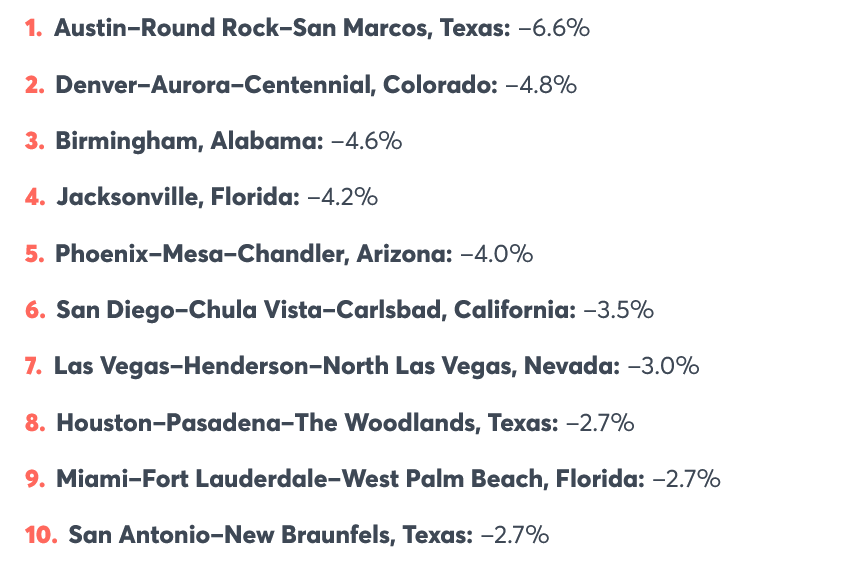
Rents have made a quick U turn. After rising substantially over the last decade, they are quickly reversing course. Why are rents now falling? Is this just a trend or a blip. Look at the chart below, how does this alter the predictions on rents? What does this mean for the inflation path? Why are mortgage rates staying high even with falling rents? What does this mean for real estate prices?
What was in the data on rents?
After years of steep increases, renters are finally seeing sustained price relief, a trend that appears to be carrying into early 2026.
In November, the median asking rent across the 50 largest U.S. metro areas was $1,693, down about 1% from a year earlier and marking the 28th consecutive month of year-over-year declines, according to Realtor.com listings data. Nationally, the median rent fell to $1,367, down 1.1% from a year earlier, according to Apartment List’s data.Is rent even being captured correctly?

How accurate is this prediction of plummeting rents
Look at the chart above. What jumps out on the page? High end apartment construction has been on a tear while low/moderate construction has been basically flat the last 6 years or so.
As a result of the high-end construction, it is not too hard to put the dots together. The high end is where the price cuts are as there is considerably more supply. We are seeing this in cities like Denver and Atlanta where new class A properties are struggling but lower/moderate rents are staying about the same.
The article on plummeting rents is a bit misleading as it would be more accurate to say that higher priced rents are declining and that is pulling down the average. Most lower/middle income households are not seeing any benefit from the declining rents.
Lower rents on high end properties is a blip not a trend
Newly released U.S. Census data reveals a dramatic turnaround in the apartment construction cycle. Over the past 12 months, developers finished 222,800 more multifamily units than they started. In other words, completions have surged ahead of new groundbreakings. This is unprecedented and underscores how sharply builders have hit pulled back on new construction.
The number of multifamily units under construction is now at its lowest level since 2021 and dropping fast. This reversal comes after a pandemic-era building boom and is sending mixed signals to the market. On one hand, the wave of new deliveries is finally cresting; on the other, the pipeline for future supply is drying up.
An apartment building cycle is 2+ years at best so whatever is happening this year or last year will show up a few years from now starting in 2027.
This means that by 2027 and beyond the falling rents will stabilize and or reverse to rising rents as inventory is drastically reduced.
What do falling rents mean for inflation?
In the short term we will see owners equivalent rent start to fall offsetting gains in other categories which will make the CPI look better. Unfortunately this is a mirage. The decline in Owners Equivalent rent will not last as supply dwindles and rents either stabilize or begin to rise again next year. This could lead to a resurgence in inflationary pressures as Owner’s Equivalent rent are one of the largest influencers of inflation.
Low rents complicate the feds interest rate path
The current CPI is not accurate due to the understatement of owners equivalent rent in the short term. This could lead the federal reserve to cut rates more than they should only to end up in an inflationary quagmire starting in 2027. The federal reserve is in a tough spot as the data is starting to point to the all clear on inflation, and yet the underlying data is saying to be cautious.
What do declining rents mean for real estate prices?
There is a high correlation between rents and real estate prices which means that dropping rents in markets like Denver or Austin should lead to lower prices. Unfortunately it is hard to figure out the exact impacts as many other variables are at play.
For example, in Denver rents are dropping along with prices, but my gut says other factors are at play. The Colorado legislature has made a number of on business friendly moves similar to California which is causing companies to relocate which in turn is impacting rents in Denver. Long and short, the cities with declining rents will come under pressure but it is the chicken vs egg question. Are other items like business relocations causing rents to drop, oversupply of high end units, etc…. Here is a prior article I did regarding the price declines in Denver.
Declining rents are short term
The headline on rents plummeting is a bit misleading to say the least. High end rents are falling due to a short term increase in supply while moderate to lower priced properties continue to hold steady on rental rates. The short term reduction in rental rates will have profound implications on interest rate policy by showing a reduction in the consumer price index which should lead to continued declines in short term rates.
Unfortunately, this year’s reduction in the CPI (on most things other than energy) due to a decrease in Owners equivalent rents looks to quickly reverse in 2027 as current construction has declined to a 6 year low which will lead to a stabilization in supply.
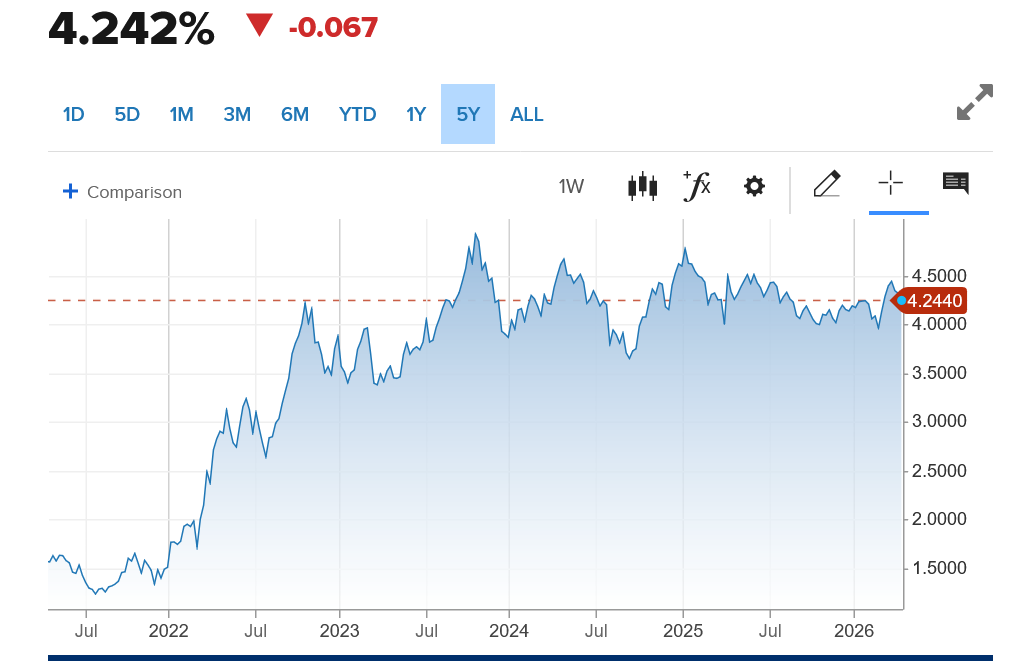
The treasury market has picked up on this facade. Even though the federal reserve recently cut rates, when you look at the chart above on the 10 year treasury above it is apparent that the market is not believing the inflation narrative. 10 year treasuries are staying about where they were even with multiple rate cuts.
Remember 10 year treasuries are what mortgage rates are pegged at so as 10 year treasuries stay high so do mortgage rates. Even though the headline sounds like great news on falling rents, the market is seeing through the mirage and interest rates will stay high much longer which will have a much more lasting impact than short term falling rents.
Additional Reading/Resources:
- https://www.clevelandfed.org/events/ev-20241024-inflation-drivers-and-dynamics-conference-2024
- https://www.bloomberg.com/news/articles/2024-11-18/powell-may-be-waiting-until-2026-for-housing-inflation-to-cool?srnd=homepage-americas
- https://www.fairviewlending.com/renters-are-conning-their-way-into-luxury-apartments/
- https://coloradohardmoney.com/why-is-denver-real-estate-falling/
We are a Private/ Hard Money Lender funding in cash!
If you were forwarded this message, please subscribe to our newsletter
Glen Weinberg personally writes these weekly real estate blogs based on his real estate experience as a lender and property owner. I’m not an armchair reporter/writer. We are an actual private lender, lending our own money. We service our own loans and own commercial and residential real estate throughout the country.
My day job is and continues to be private real estate lending/ hard money lending which enables me to have a unique perspective on the market. I don’t accept any paid sponsorships or ads on my blog to ensure accurate information. I’ve been writing this for almost 20 years and have over 30k subscribers. Please like and share my blogs on linkedin, twitter, facebook, and other social media and forward to your friends 😊. I would greatly appreciate it.
Fairview is a hard money lender specializing in private money loans / non-bank real estate loans in Georgia, Colorado, and Florida. We are recognized in the industry as the leader in hard money lending/ Private Lending with no upfront fees or any other games. We fund our own loans and provide honest answers quickly. Learn more about Hard Money Lending through our free Hard Money Guide. To get started on a loan all we need is our simple one page application (no upfront fees or other games). Learn how to find a reputable hard money lender and why Fairview is the best hard money lender for investors.
Written by Glen Weinberg, COO/ VP Fairview Commercial Lending. Glen has been published as an expert in hard money lending, real estate valuation, financing, and various other real estate topics in Bloomberg, Businessweek ,the Colorado Real Estate Journal, National Association of Realtors Magazine, The Real Deal real estate news, the CO Biz Magazine, The Denver Post, The Scotsman mortgage broker guide, Mortgage Professional America and various other national publications.
Tags: Hard Money Lender, Private lender, Denver hard money, Georgia hard money, Colorado hard money, Atlanta hard money, Florida hard money, Colorado private lender, Georgia private lender, Private real estate loans, Hard money loans, Private real estate mortgage, Hard money mortgage lender, residential hard money loans, commercial hard money loans, private mortgage lender, private real estate lender, residential hard money lender, commercial hard money lender, No doc real estate lender