 In every nightly rental discussion throughout the country, there is this theory that nightly rentals are increasing rents and pricing out locals. How true is this statement? What happened in NY when nightly rental were severely restricted? What has happened in every ski town in Colorado? What does the data coming out of NY mean for nightly rental regulations throughout the country?
New York’s nightly rental experiment to drastically reduce nightly rentals, what happened in real life?
Short-term rentals took up only a tiny fraction of housing in New York City. There were an estimated 38,500 Airbnb units at the start of 2023, out of more than a million open-market residential units. While that number might seem too small to move the needle on housing availability or affordability, city officials point out that it does make a difference when there are only around 40,000 apartment vacancies. Fast forward to 2025, Under New York City’s stricter enforcement levels, there are now about 3,000 short-term rentals operating legally, according to the Office of Special Enforcement. Hosts can’t have more than two guests in a unit or lock off rooms and must be present during the stay. Local Law 18 requires short-term rental hosts who list on booking platforms to register with the city, and fines those platforms for processing transactions from unregistered hosts.
What happened to rents from nightly rental regulations in NY
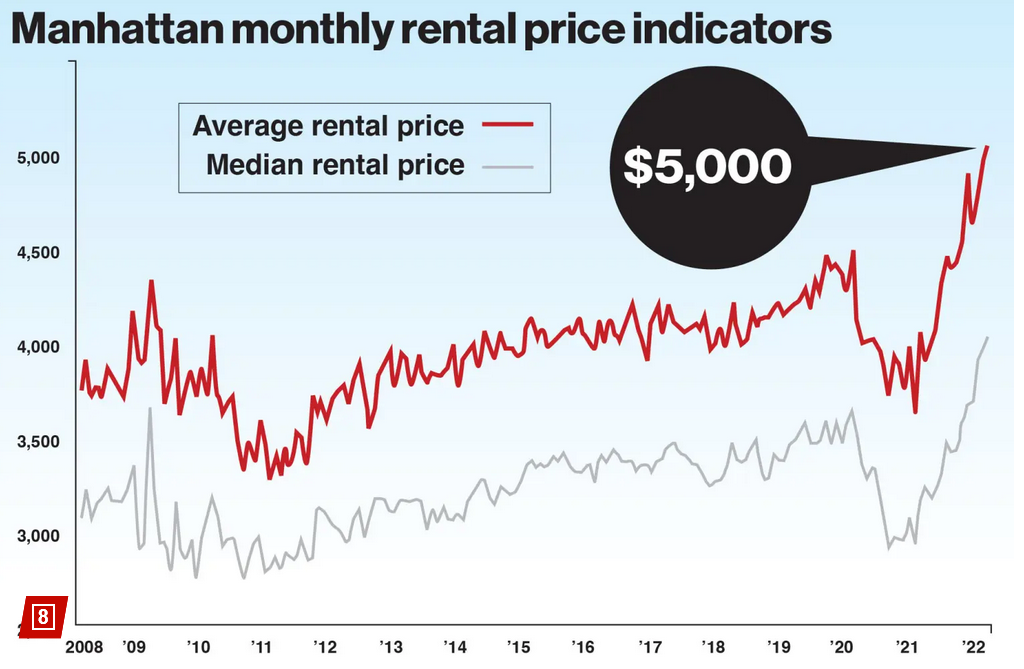
With a decline of almost 35k units and around 40k vacant units in NY, one would suspect that the nightly rental regulations would substantially help NY’s long term rental market. Unfortunately the results were just the opposite: Apartment rents are at all-time highs, while the vacancy rate is next to nothing. The new legislation removed tens of thousands of short-term rentals from New York City apartment buildings, but rents still rose. Manhattan’s residential-rental vacancy rate was 2.45% in July, near all-time low levels, according to Miller. The median rent has climbed to an all-time high, at $4,700 a month “The law doesn’t seem to have a material impact in making rents more affordable,” said Jonathan Miller, chief executive of real-estate-appraisal firm Miller Samuel.
Why did rents rise/move higher In NY and other large nightly rental markets
I doubt the new law added much of any new supply to the long term rental market. People who typically rent their properties nightly are doing so for the following reasons:
- Nightly rental rates substantially higher than long term rental rates
- Owners also want to use the property when they visit
Long and short, based on the price points in NY it is not very profitable to have long term rentals. This is true also in many ski towns undergoing the same discussions on nightly rentals. For example, the median home price in Steamboat Springs, CO is 1.6m, if you wanted a 7% return you would have to rent the house for 10k/month, not many people can afford 10k/month for rent and furthermore most people buy properties in places like Steamboat so that they can use it for their ski vacation or summer adventures. It should not be surprising that nightly rentals did not increase the long-term supply of rental properties. This is just basic economics.
Nightly rental regulations didn’t reduce rents but increased quality of life
Although I focused on rents, there is a huge byproduct of nightly rental regulations in NY and elsewhere. Many think that the 2023 legislation is a success because it gave the city tools to enforce its existing laws around short-term rentals. It helped reduce quality-of-life complaints from residents who had been sharing their buildings with illegal short-term rentals, Council Member Gale Brewer said. Before the increased enforcement, Brewer said her office often received calls about apartments being used by an endless stream of short-term rental guests who were “partying and throwing up.” “Since the law passed I never heard another word about that,” Brewer said, “because people are going to get caught.” Although it is hard to measure “quality of life” this is a big consideration for full time residents as nobody wants to suddenly live with a raucous nightly rental above them. Quality of life is the big concern for residents as they are impacted daily by the nightly rentals.
What can towns throughout the country learn from the NY experiment on nightly rentals?
The key takeaway from NY and other cities is that reducing nightly rentals does not help locals with more affordable rents but it is also important to note that nightly rental reductions are not why rents rose in NY or other popular cities. Properties in the short term rental pool, even with huge restrictions like NY, do not lead to a sizeable upswing in available units. The discussion around affordability in regards to nightly rentals needs to be more honest, nightly rental restrictions do not increase the supply of affordable housing now or in the future. This should not be a mystery due to the price points in towns like NY, Steamboat Springs, Aspen, etc.. It makes no financial sense at the high price points to have a long term rental in any of these markets. On the flip side, there is a material impact on Quality of Life issues with nightly rentals. The discussion on nightly rentals should work to balance the Quality of life issues for locals as at the end of the day, only locals get to vote!
Note important to separate why rents increased
I want to clarify that the report about rents increasing is very misleading. The reductions in nightly rentals did not lead to the increase in rents. The reductions in nightly rentals merely kept rents the same. There is a huge difference between the two. The real reason rents have continued to increase in popular destination markets like NY, Aspen, or various others is two fold.
- Huge demand: the reason places like NY and Aspen have high rents is they are desirable places to live and work and demand will always outpace supply in these markets.
- Government policies: Whether it is NY or CO the huge governmental regulations on building new supply along with increased burdens on property owners for long term rentals is a huge driver of the rent increases. Take Colorado for example, they passed a new law titled “just cause for eviction” that makes it difficult if not impossible to get rid of bad tenants cost effectively. This law has led to a decrease in supply and also a continuation “up market” to rent at higher price points to avoid issues like just cause for eviction.
Summary
The results from New York’s experiment on nightly rentals should not be shocking to anyone. Basic economics always rules regardless of the meddling by government policies. As we can see from NY, the stated goal of increasing affordability is not relevant as the data doesn’t support this premise. On the flip side there are quality of life issues that the restrictions helped. I would caution to draw strong conclusions from the NY data because at the same time nightly rentals were reduced a number of government policies also made it more expensive for landlords while at the same time NY remained a desirable area with huge demand. Long and short rents increased for reasons other than the reduction in nightly rentals. Rest assured both sides on the nightly rental debate are going to try and spin these statistics to either increase or decrease nightly rentals.
Additional Reading/Resources
https://www.wsj.com/real-estate/new-yorks-airbnb-crackdown-in-force-for-two-years-hasnt-improved-housing-supply-eb231536? https://coloradohardmoney.com/one-colorado-city-proposes-5k-room-in-short-term-rental-fees/ https://coloradohardmoney.com/new-nightly-rental-regulations-in-breckenridge-that-the-industry-supports/ https://coloradohardmoney.com/colorado-vacancy-tax/
We are a Private/ Hard Money Lender funding in cash!
If you were forwarded this message, please subscribe to our newsletter
Glen Weinberg personally writes these weekly real estate blogs based on his real estate experience as a lender and property owner. I’m not an armchair reporter/writer. We are an actual private lender, lending our own money. We service our own loans and own commercial and residential real estate throughout the country. My day job is and continues to be private real estate lending/ hard money lending which enables me to have a unique perspective on the market. I don’t accept any paid sponsorships or ads on my blog to ensure accurate information. I’ve been writing this for almost 20 years and have over 30k subscribers. Please like and share my blogs on linkedin, twitter, facebook, and other social media and forward to your friends . I would greatly appreciate it. Fairview is a hard money lender specializing in private money loans / non-bank real estate loans in Georgia, Colorado, and Florida. We are recognized in the industry as the leader in hard money lending/ Private Lending with no upfront fees or any other games. We fund our own loans and provide honest answers quickly. Learn more about Hard Money Lending through our free Hard Money Guide. To get started on a loan all we need is our simple one page application (no upfront fees or other games). Written by Glen Weinberg, COO/ VP Fairview Commercial Lending. Glen has been published as an expert in hard money lending, real estate valuation, financing, and various other real estate topics in Bloomberg, Businessweek ,the Colorado Real Estate Journal, National Association of Realtors Magazine, The Real Deal real estate news, the CO Biz Magazine, The Denver Post, The Scotsman mortgage broker guide, Mortgage Professional America and various other national publications. Tags: Hard Money Lender, Private lender, Denver hard money, Georgia hard money, Colorado hard money, Atlanta hard money, Florida hard money, Colorado private lender, Georgia private lender, Private real estate loans, Hard money loans, Private real estate mortgage, Hard money mortgage lender, residential hard money loans, commercial hard money loans, private mortgage lender, private real estate lender, residential hard money lender, commercial hard money lender, No doc real estate lender