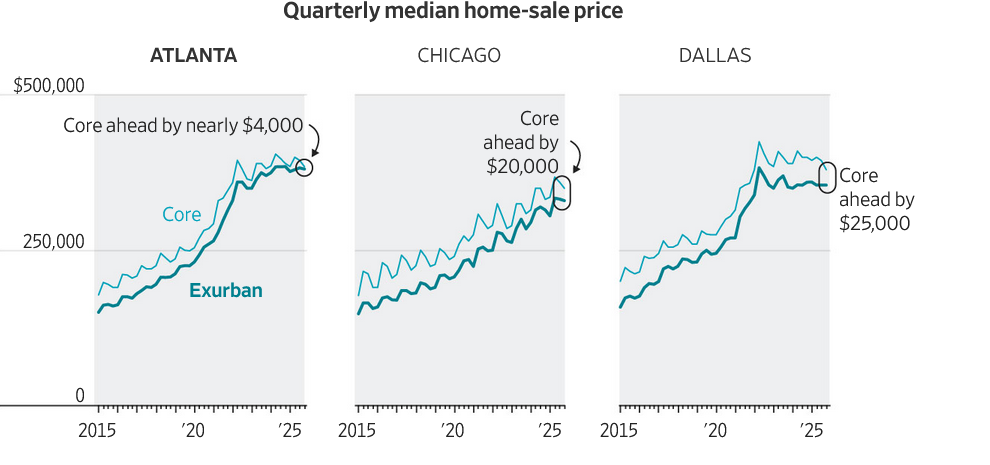
Over the last 30+ years it has historically been more expensive to live inside a city versus the suburbs. The demand for urban living was huge over the last 20 years. This narrative is now changing with the suburbs in many major cities poised to overtake urban living. Why is this change in urban vs. suburban pricing so significant? What does this mean for where you should invest in real estate?

What was in the data on suburban vs. urban core? Atlanta
The median sale price of homes in Atlanta’s exurbs was $380,962 in the fourth quarter of 2025, or about $4,000 shy of the prices in the neighboring metropolitan area and surrounding suburbs. That gap has narrowed from a high of $51,000 in the second quarter of 2021. If the trend continues at the current pace, sometime this year Atlanta will become the only major U.S. metropolitan area where exurban home prices exceed those of the accompanying city.
Denver versus suburbs
Atlanta is not unique. Denver is following similar trends to Atlanta, with suburban areas like Parker in Douglas county now exceeding Denver county for both Median and average home price. This is a huge shift as Denver was the powerhouse of the front range and now this is shifting to suburban areas like Jefferson, Douglas, Boulder, and all the way up to Fort Collins (Larimer County).


Why is this shift to suburbia so profound?
It is not an accident that Suburban and exurban markets now exceed the urban core. During Covid millions moved out of the urban core for open spaces. In turn businesses followed moving to regional offices in various suburbs. This occurred because Suburban areas are typically younger than urban areas meaning that the average age of a property in a suburban area is considerably younger than an urban building. Assume an office building, in suburban areas they are typically newer which means they are likely more functional.
Furthermore the suburban areas typically don’t have the legacy issues of crime, aging infrastructure, high taxes, etc… that are burdening many urban areas. Schools are typically better in suburban areas as well making it easier to attract employees to the urban areas. Essentially the suburbs have become micro cities with similar amenities without the crime, taxes, and other negatives of large cities.
Self Fulfilling on urban core struggles vs suburbia
Having suburbia/exurbia exceed the urban core is a worrying trend that will ultimately snowball into much larger issues. Think of cities like Denver, office buildings in some areas are trading at 30% of the value from just a few years ago meaning that they have lost 70% of their value. This in turn will flow through to the tax rolls with huge hits to revenue in places like Denver. This revenue hit comes at the same time homelessness is increasing and costs for servicing the city from police, firefighters, etc… increasing due to rising wages, increased equipment costs, etc…
This double whammy of higher costs with lower revenue will lead to two options 1) higher taxes to close the shortfall 2) less services to cut expenses. Both of these options will ultimately lead to a snowball effect where companies run for the suburbs with lower costs, newer buildings, less taxes, and ultimately less hassle to conduct their business outside of the urban core.
Should your real estate investing follow the suburban trend?
With prices rising faster in the suburbs versus the urban core, you absolutely need to factor this in to any investment decisions. The urban cores will likely struggle in many cities with rising taxes or decreases in service while they are also burdened with higher costs than many suburban markets. Long term it looks like suburban properties will have less risk than the urban core.
I would give a few caveats to the urban vs suburban debate. As we all know, each real estate market is different. For example, Sandy Springs which is in Fulton county and part of Atlanta metro is outperforming the urban core of downtown Atlanta. Another example is Cherry Creek in Denver, still an urban area, but vastly different than other parts of the city. Long and short each situation is unique, there are still some great buys in submarkets within an urban core that could outperform other areas.
On the flip side, I would also be cautious with exurban markets, these farther out markets have much more supply and could adjust much quicker if there is a downturn than other suburban markets.
What should you do now with the shift from urban to suburban
The shift from urban to suburban was turbocharged during the Covid pandemic. I, like many, had originally predicted a swift return of old habits with the downtown core increasing and a flight back to the cities. Unfortunately the opposite has occurred in many parts of major cities with employers relocating outside of the cities for economic reasons and there employees following. The pending disaster in the office market with large buildings trading at huge discounts is going to turbocharge this trend with many cities either having to raise taxes to make up for the shortfall or decrease services. Both of these choices will help tilt the scales in favor of suburban areas.
Furthermore, I don’t think this is a blip where urban areas are declining as there has been a fundamental change that we are now seeing in cities throughout the country. Both work and play are migrating out of the urban cores into the suburbs taking residents, employers and tax dollars with them.
The days of everything with four walls going up are over. Based on the current trends, on my investments I am focusing on suburban areas but note there will be some opportunities in submarkets within urban areas, but you will need to be very careful and knowledgeable about your investments going forward.
Additional Reading/Resources:
- https://www.wsj.com/real-estate/living-on-the-outskirts-of-atlanta-is-about-to-be-pricier-than-living-in-it-a2bd7c0d?mod=mhp
- https://www.fairviewlending.com/when-will-there-be-a-major-reset-in-real-estate-prices/
- https://www.fairviewlending.com/what-happens-to-the-economy-from-the-iran-war/
- https://www.fairviewlending.com/get-your-own-house-in-order-to-solve-affordability/
We are a Private/ Hard Money Lender funding in cash!
If you were forwarded this message, please subscribe to our newsletter
Glen Weinberg personally writes these weekly real estate blogs based on his real estate experience as a lender and property owner. I’m not an armchair reporter/writer. We are an actual private lender, lending our own money. We service our own loans and own commercial and residential real estate throughout the country.
My day job is and continues to be private real estate lending/ hard money lending which enables me to have a unique perspective on the market. I don’t accept any paid sponsorships or ads on my blog to ensure accurate information. I’ve been writing this for almost 20 years and have over 30k subscribers. Please like and share my blogs on linkedin, twitter, facebook, and other social media and forward to your friends 😊. I would greatly appreciate it.
Fairview is a hard money lender specializing in private money loans / non-bank real estate loans in Georgia, Colorado, and Florida. We are recognized in the industry as the leader in hard money lending/ Private Lending with no upfront fees or any other games. We fund our own loans and provide honest answers quickly. Learn more about Hard Money Lending through our free Hard Money Guide. To get started on a loan all we need is our simple one page application (no upfront fees or other games). Learn how to find a reputable hard money lender and why Fairview is the best hard money lender for investors.
Written by Glen Weinberg, COO/ VP Fairview Commercial Lending. Glen has been published as an expert in hard money lending, real estate valuation, financing, and various other real estate topics in Bloomberg, Businessweek ,the Colorado Real Estate Journal, National Association of Realtors Magazine, The Real Deal real estate news, the CO Biz Magazine, The Denver Post, The Scotsman mortgage broker guide, Mortgage Professional America and various other national publications.
Tags: Hard Money Lender, Private lender, Denver hard money, Georgia hard money, Colorado hard money, Atlanta hard money, Florida hard money, Colorado private lender, Georgia private lender, Private real estate loans, Hard money loans, Private real estate mortgage, Hard money mortgage lender, residential hard money loans, commercial hard money loans, private mortgage lender, private real estate lender, residential hard money lender, commercial hard money lender, No doc real estate lender