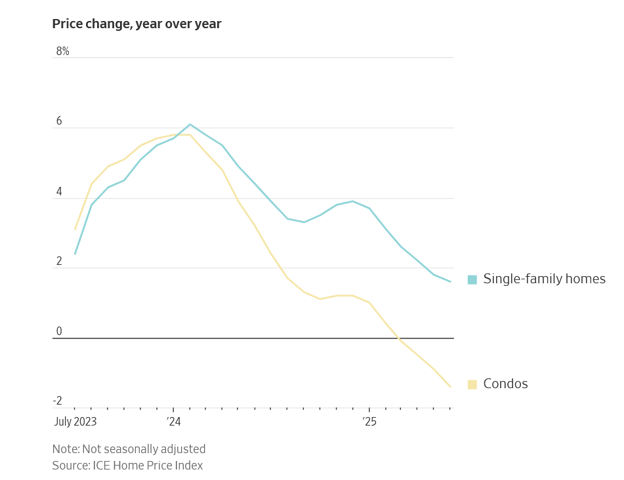
Many don’t know but the overwhelming majority of all loans originated are ultimately sold to governments sponsored entities like Fannie or Freddie that package the loans and sell as mortgage backed securities. This means that whatever Fannie and Freddie dictate in regard to underwriting has far reaching consequences on the real estate market throughout the country. Why are the new policies leading to fire sales of condos throughout the country? How will the new rules make some condos worthless?
Huge changes to condo underwriting that impact prices:
Fannie Mae’s condo guidelines—particularly those for new or newly converted condo projects—tightened significantly to protect buyers from structural hazards and financial instability. Lenders are now strictly auditing HOA budgets, structural inspections, and master insurance policies before approving a conventional mortgage.
Key guidelines and recent updates include:
- Pre-Sale Requirements: At least 50% of the total units in the project (or subject legal phase) must be conveyed or under contract to principal residence or second-home buyers.
- Deferred Maintenance & Structural Reviews: Lenders must review structural/mechanical inspection reports and reserve studies from the past 3 years
**** Projects with critical, unfunded repairs exceeding 10k per unit are ineligible. ***
Stricter Reserve Allocations: Condo associations must allocate at least 15% of their annual budget to capital reserves (unless a reserve study proves a lower amount is sufficient).
- Delinquency Limits: No more than 15% of the total units in the project can be 60 days or more past due on their HOA fees.
- Master Insurance Requirements: Master policies must cover 100% of the insurable replacement cost. The policy must also include an “inflation guard” and a “waiver of subrogation”.
- Small Project Exemptions: Projects with 5 to 10 units now qualify for a waiver of the full project review, provided they are not part of a larger master association
Big changes in underwriting will be impossible for some condos
There are three big changes mentioned above that will make it next to impossible for many condos to comply:
- Reserve requirements: the numbers could be enormous for older buildings
- Insurance requirements: insurance is already a huge issue as rates have skyrocketed due to rebuild costs and claims. Forcing HOAs to have full coverage policies will be another major expense that HOA’s can’t afford
- Delinquency limits: As a result of the first two delinquencies will rise and furthermore in states like Colorado new laws have been passed that make collecting HOA dues almost impossible.
Many associations do not have the wherewithal to drastically increase HOA dues for reserves or new insurance requirements. Unfortunately because of the reserve and Insurance requirements making HOA dues higher there will no doubt be more delinquencies.
New Fannie requirements make many condos unfinanceable
As a result of the three conditions above many condo associations will not be financeable. The sad part is that the number of unfinanceable condos will fall on lower priced and older associations. Think of an HOA where the average condo price is 150k, now because of reserve and insurance increases the HOA bill is now 1k/mo. Owners in these units can’t afford the HOA fee which would be close to their mortgage payment.
Furthermore, nobody wants to buy in a unit with high HOA fees further driving down prices and increasing the risk that many owner merely walk away from their units as they are too expensive to own. On the flip side if someone is buying an 850k condo they can absorb an increase in the HOA dues much better.
The new Fannie requirements will be the death knell for lower priced and older condo units as their values are pushed to zero (or even negative depending on if there are special assessments).
Huge impacts to new construction of condos
One of the new requirements is for new construction where at least 50% of the total units in the project (or subject legal phase) must be conveyed or under contract to principal residence or second-home buyers. In essence Fannie/Freddie will not finance any project until over half are under contract. This will make it very difficult for some condos to pencil out because getting to 50% sales could take a while which would mean that new buyers would not be able to get financing. Builders likely would do some sort of owner financing, but this will increase the cost of the project and make many lower cost projects unfeasible.
What happens to condominium prices going forward?
In lower priced and older complexes the numbers no longer add up. Many of these units could actually become worthless or worst case a liability with the huge jumps in HOA fees and special assessments. Unfortunately this will lead to a “death spiral” in many complexes.
Will the condo price reset get worse?
We are just at the beginning. HOAs for years have pushed off repairs and reserve increases to keep dues low. The tides have swiftly changed and now condos are required to fully fund their reserve accounts and take care of long deferred repairs. This will lead to a huge increase in HOA fees in many complexes along with severe price drops
Should you buy a condo at any price? Which ones have the least risk
With the new laws, you should think twice before purchasing a condo. Even if the price is dirt cheap, many complexes will ultimately be unfinanceable which will lead to huge drops in value. We are just in the early stages of seeing where the dirt is hidden within HOAs.
With that said, if you were buying, I would avoid lower priced and older buildings, especially large complexes that have elevators and communal systems like boilers, chillers, etc…. I would focus on more mid-high priced units without a ton of infrastructure. For example a low rise building that has been well maintained and updated. Even buying a mid-high priced unit still has some risks so ensure you understand any special assessments and that the HOA meets all the current Fannie requirements. Also, make sure you read my prior article on the secret Fannie/Freddie condo blacklist.
Long and short, with the new HOA requirements you must be extremely careful as there could be some gems but more than likely you will be finding a lump of coal that could turn out to be totally worthless.
Additional reading/resources
- https://www.denverpost.com/2026/05/21/buying-a-condo-just-got-harder-for-many-thanks-to-fannie-mae-policies/
- https://coloradohardmoney.com/new-bill-in-colorado-legislature-drastically-increases-hoa-fees/
- https://www.fairviewlending.com/category/condo-lending/
- https://www.fairviewlending.com/secret-mortgage-blacklist-is-your-property-on-it/
We are a Private/ Hard Money Lender funding in cash!
If you were forwarded this message, please subscribe to our newsletter
Glen Weinberg personally writes these weekly real estate blogs based on his real estate experience as a lender and property owner. I’m not an armchair reporter/writer. We are an actual private lender, lending our own money. We service our own loans and own commercial and residential real estate throughout the country.
My day job is and continues to be private real estate lending/ hard money lending which enables me to have a unique perspective on the market. I don’t accept any paid sponsorships or ads on my blog to ensure accurate information. I’ve been writing this for almost 20 years and have over 30k subscribers. Please like and share my blogs on linkedin, twitter, facebook, and other social media and forward to your friends 😊. I would greatly appreciate it.
Fairview is a hard money lender specializing in private money loans / non-bank real estate loans in Georgia, Colorado, and Florida. We are recognized in the industry as the leader in hard money lending/ Private Lending with no upfront fees or any other games. We fund our own loans and provide honest answers quickly. Learn more about Hard Money Lending through our free Hard Money Guide. To get started on a loan all we need is our simple one page application (no upfront fees or other games). Learn how to find a reputable hard money lender and why Fairview is the best hard money lender for investors.
Written by Glen Weinberg, COO/ VP Fairview Commercial Lending. Glen has been published as an expert in hard money lending, real estate valuation, financing, and various other real estate topics in Bloomberg, Businessweek ,the Colorado Real Estate Journal, National Association of Realtors Magazine, The Real Deal real estate news, the CO Biz Magazine, The Denver Post, The Scotsman mortgage broker guide, Mortgage Professional America and various other national publications.
Tags:Hard Money Lender, Private lender, Denver hard money, Georgia hard money, Colorado hard money, Atlanta hard money, Florida hard money, Colorado private lender, Georgia private lender, Private real estate loans, Hard money loans, Private real estate mortgage, Hard money mortgage lender, residential hard money loans, commercial hard money loans, private mortgage lender, private real estate lender, residential hard money lender, commercial hard money lender, No doc real estate lender